



A Polish cosmetics producer needed to handle 19 packaging formats and products with very different viscosities. This case study outlines the recommended filling, changeover, capping and labelling approach.
A Polish producer of professional cosmetics needed a cosmetic filling line for a diverse product portfolio and multiple packaging formats. Its customers included beauty salons, spas and aesthetic medicine providers, alongside users of dermocosmetics and home-use body care products.
The project covered creams, balms, body butters, tonics, body mists, shower gels and two-phase makeup removers. The main challenge was to combine different product consistencies, container sizes and closure requirements within one production workflow.
Packaging Formats and Product Viscosities
The reported requirement covered 19 packaging formats, including plastic bottles and glass jars, with capacities from 25 ml to 1000 ml. Product viscosity varied substantially across the range:
- Facial creams, body balms and butters: reported viscosity of “35-79 000 cP”.
- Watery, non-foaming cosmetics, including tonics and body mists: 0.89–1.79 cP.
- Shower gels: reported viscosity of “14-18 000 cP”.
- Products described in the source as emulsifiers, ensemble with oil- and water-based two-phase makeup removers: below 100 cP.
The cream and shower-gel ranges are reproduced as reported because their numerical notation is ambiguous. Their intended lower limits and measurement conditions require confirmation. The term “emulsifiers” also requires clarification before it can be treated as a definitive product category.
Servo-Driven Piston Dosing
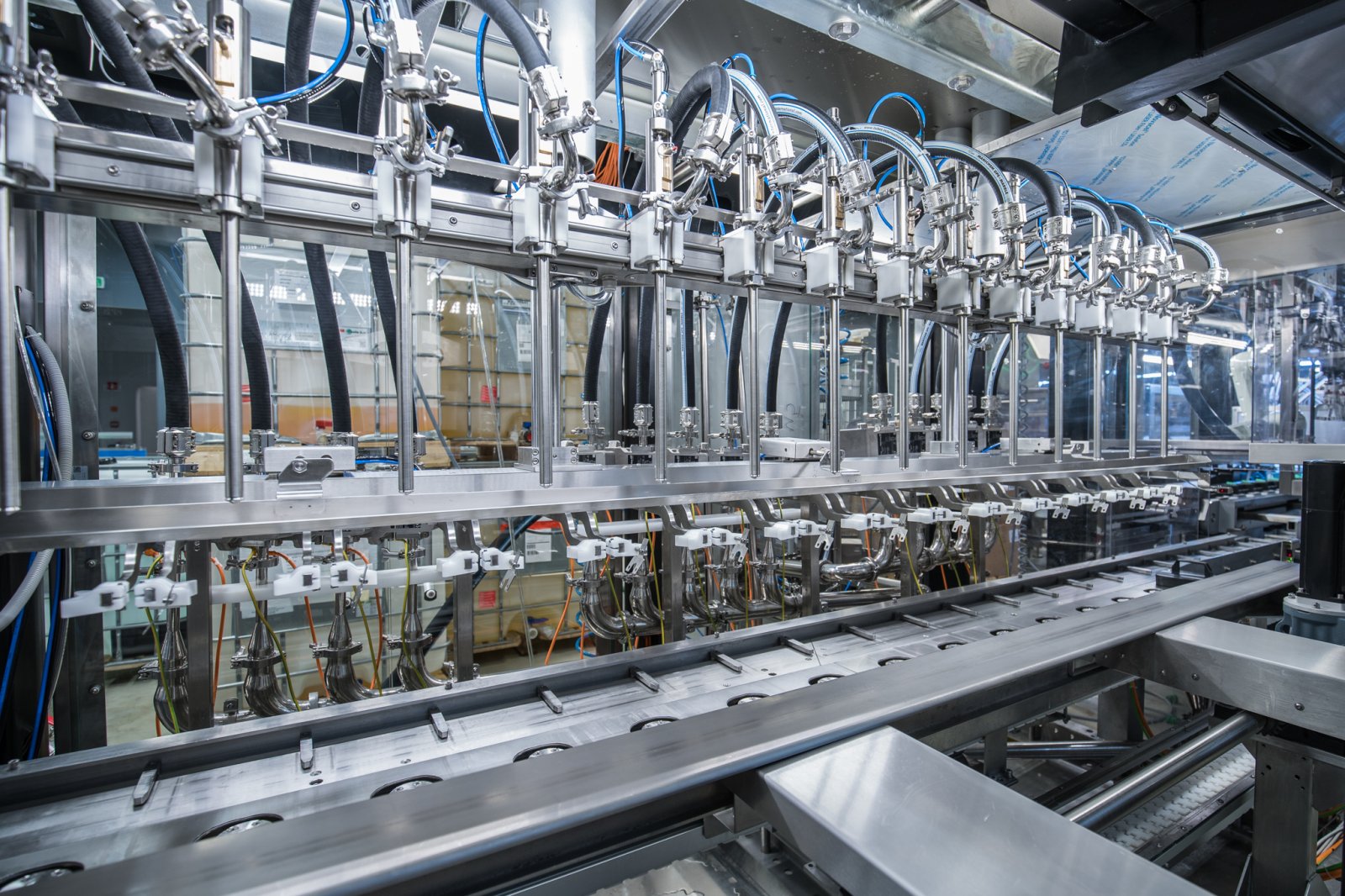
The recommended solution used servo-driven piston technology to accommodate different dosing amounts and product consistencies. This servo driven filling machine approach was proposed for both liquid and semi-liquid cosmetics, including piston dispensing for creams.
Subsurface Filling and Product Presentation
The recommendation included filling just below the liquid surface to help control foaming, with shampoos, soaps and other foaming products cited as examples. Actual foam reduction depends on the product and filling arrangement; the source does not specify the nozzle-motion mechanism.
Multiphase dosing and dispensing different coloured products within one cycle were also described as possible capabilities. These should be distinguished from confirmed applications demonstrated on the customer's equipment.
Removable Dispensers for Cleaning
For the cream filling machine application, the dispenser could be removed for washing while a second, prepared dispenser was connected for filling. This arrangement was intended to simplify cleaning and retooling between products. The source does not specify cleaning procedures or product-change limitations.
Small Batch Production Automation and Format Changes
Small production runs made rapid format changeover an important requirement. The proposed multi format filling machine arrangement used replaceable format moulds and centring components to support transitions between the specified containers.
The centring components maintained bottle positioning during processing. Supported formats and the tooling needed for each container should be confirmed rather than assuming that the line can handle every packaging type.
Capping Delicate Cosmetic Jars
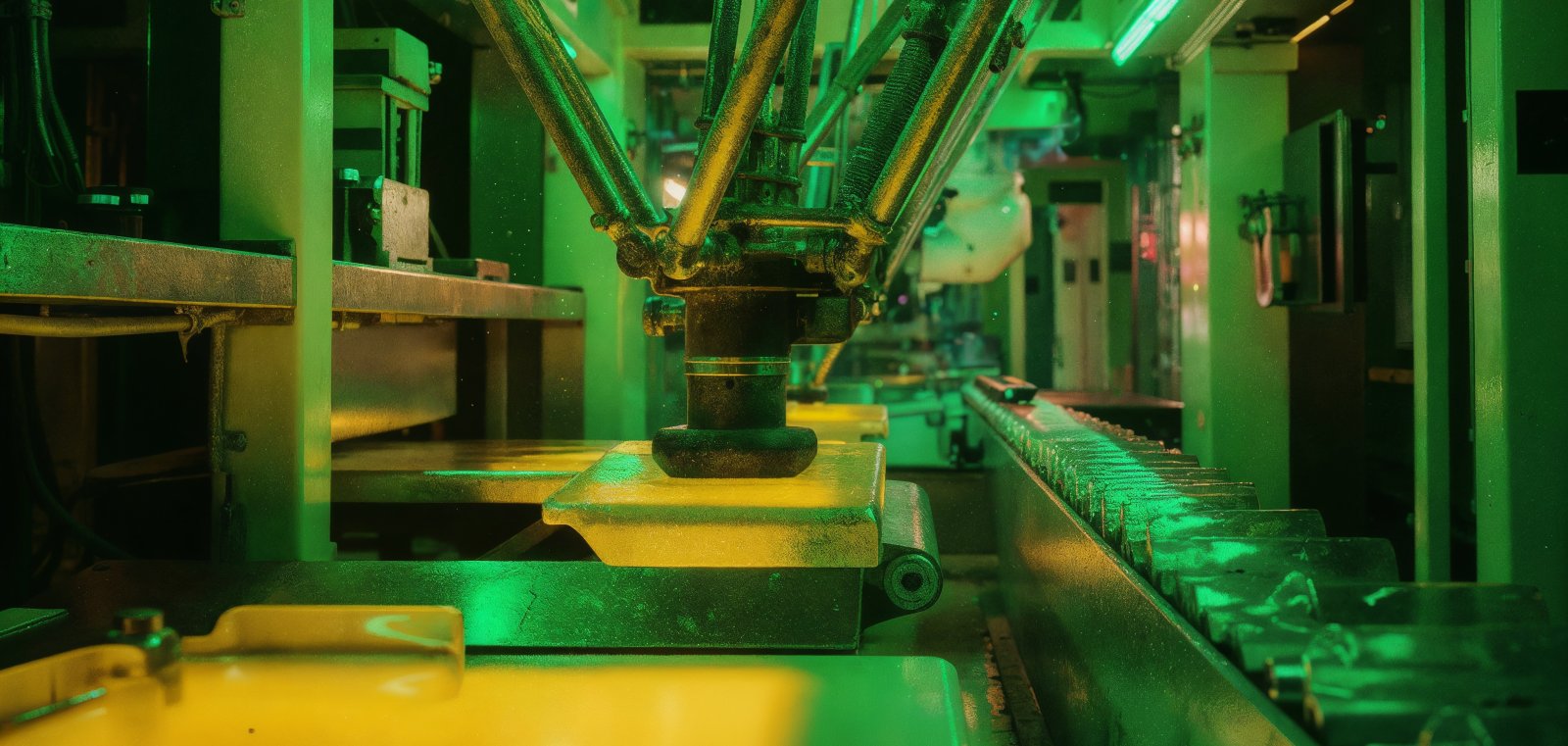
The bottle filling and capping line concept included feeder-based pick-and-place handling of threaded, traditional flat caps for cream jars.
Careful closure handling was particularly important because cosmetic jar lids can be delicate, gilded or metallic. The project aimed to protect their appearance while achieving an effective seal. Scratch prevention and sealing performance should be verified for the actual lid and container combinations rather than treated as unconditional guarantees.
Conveyor Transfer and ROTO Labelling
Filled and capped containers travelled automatically along a conveyor to a ROTO labeller for round containers. This downstream connection formed an integrated filling and labelling line.
The source also described alternative labelling configurations that could be added according to project requirements:
- Labelling for flat bottles.
- Front and rear labels.
- Top and bottom labels.
These configurations were presented as options, not as confirmed equipment supplied in this installation. For a comparable project, define the product range, container formats, closures and label positions before confirming the line configuration.