





Learn how palletisation prepares goods for storage and transport, compare robotic systems, and review the main factors in selecting palletising equipment.
Palletisation prepares finished goods for storage and transport by placing them on pallets or in other bulk packaging. Usually carried out at the end of production, it must protect products against damage. Robotic packaging automation can take over repetitive lifting and positioning tasks, while the choice of equipment depends on the goods, required capacity and available space.
In this article:
- What is palletisation?
- Advantages of automatic palletising
- Which palletising system should you choose?
- Palletisation of goods: summary
What is palletisation?
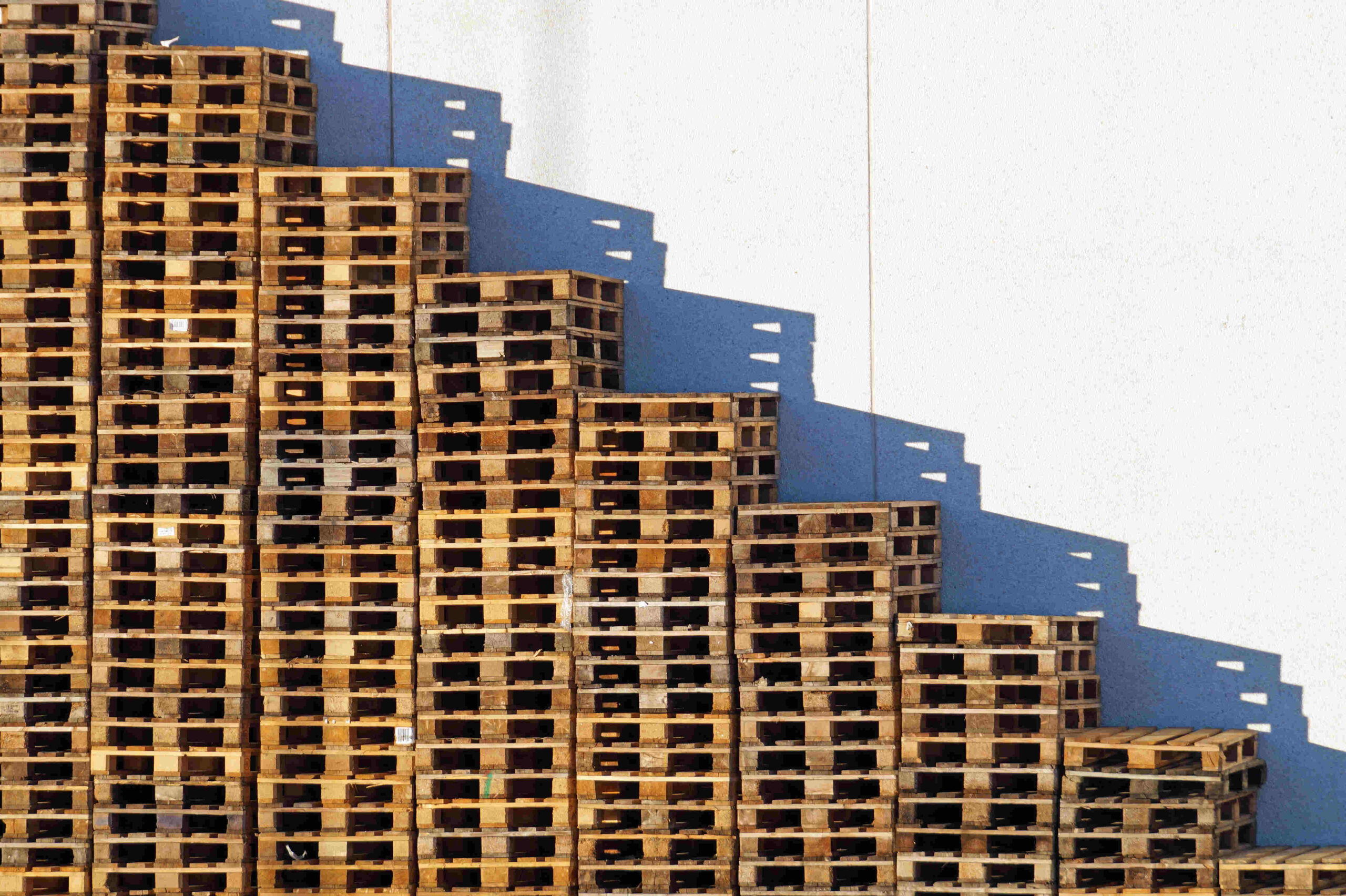
Palletisation is the process of placing goods on a pallet or in another type of bulk packaging. It is the final stage of almost every production process and prepares finished products for storage and further transport.
Correct positioning helps protect the goods. Incorrectly placed products can become damaged or fall from the pallet, creating a hazard.
Palletising was traditionally performed manually, but automated systems are becoming increasingly common, particularly in larger manufacturing companies and warehouses. Manual palletising involves repetitive movements over long periods. Even light packages can place strain on workers’ backs and joints when lifted hundreds of times a day, while the repetitive work can cause physical and mental fatigue.
Robotic palletising takes over these repetitive tasks and allows employees to be reassigned to other, more demanding work.
Advantages of automatic palletising
Automatic palletising can increase efficiency and improve the precision of goods placement while reducing workers’ exposure to repetitive lifting. Its main advantages include:
- Less repetitive manual handling: robots take over movements that can cause fatigue and strain for employees.
- Greater placement precision: automated equipment can position goods more precisely than manual handling.
- Higher palletising speed: suitably fenced industrial robots can carry out movements faster than people.
- Layer handling: systems with sufficient lifting capacity can stack an entire layer of goods in one movement.
- Operation in difficult conditions: automated palletising can be used in dusty areas and spaces with limited or no lighting.
Robots do not need the rest breaks required by employees performing repetitive lifting, although automated systems can still break down. The initial purchase cost of an industrial robot can be high, but the source identifies larger manufacturing companies and warehouses as operations where the investment can pay back quickly.
Which palletising system should you choose?
Choosing automated packaging machinery starts with an analysis of the products and production requirements. For packaging line material handling, the main selection factors are:
- Package shape and dimensions.
- Package weight.
- Target capacity of the production line.
- Available installation space.
These factors help determine both the appropriate robot and the design of its gripper.
Articulated robots
Articulated robots are commonly used in palletising workstations because of their reach, lifting capacity and versatility. With an appropriate gripper, they can handle a wide variety of goods and are used across many industries.
Cartesian robots
Cartesian systems can be adapted to different product dimensions and weights, providing flexibility in equipment design. They are particularly suitable for palletising products packed in cartons and boxes.
Building a Cartesian system with a gripper is generally less expensive than buying an articulated robot. The trade-off is a more limited freedom of movement than an articulated robot provides.
Collaborative robots
Collaborative robots are increasingly used for palletising smaller, lighter goods in applications with lower capacity requirements. Their ability to work alongside people and their compact installation requirements make them an option where space is limited.
Palletisation of goods: summary
Palletisation prepares finished products for storage and transport. Automating this stage can increase efficiency and placement precision while relieving employees of repetitive lifting. Package characteristics, target capacity and available space help determine whether an articulated robot, Cartesian system or collaborative robot is appropriate.
Are you considering automating palletising in your company? Use the contact form to request a quote. Unilogo’s team can help you select a solution for your product.