



Explore the main stages of liquid soap production, from formulation and quality testing to filling, capping and labelling, plus the business decisions needed before investing.
Starting liquid soap production requires more than a formulation and a packaging design. Manufacturers need a defined production process, reliable ingredient suppliers, suitable facilities and equipment matched to their planned output. Choosing a liquid soap filling machine is one part of this wider investment.
This guide explains the production stages described in the source, the role of packaging machinery and the commercial and regulatory questions to resolve before starting.
- Liquid soap and its ingredients
- The liquid soap production process
- Planning a liquid soap manufacturing business
- Selecting production and packaging equipment
- Next steps
Liquid soap and its ingredients
Liquid soap is widely used for handwashing and became particularly prominent during the COVID-19 pandemic. Its history extends back to the nineteenth century. Washing helps remove dirt and microorganisms from the hands; this should not be confused with a verified antibacterial or germ-killing claim.
Products marketed as liquid soap may be soap-based or use other surfactants. This distinction matters because formulation and manufacturing methods can differ. Surfactants provide cleansing and contribute to lather, while additional ingredients may include vitamins, essential oils or extracts. Moisturising or other skin-care claims should be supported for the finished formulation.
Although liquid soap can be made on a small scale, industrial production requires equipment and controls appropriate to the formulation, batch size and packaging format.
The liquid soap production process
1. Develop the formulation and define water quality
Production starts with a formulation specifying the ingredients and their proportions. The process described here uses water, surfactants and selected additional ingredients.
Water quality is an important formulation consideration. The source specifies demineralised, treated water; the required treatment and acceptance criteria should be confirmed for the actual product and production process rather than assumed to be universal.
2. Test the product before industrial production
The source describes laboratory application tests and instrument-based testing before moving to industrial production. These checks help establish whether the formulation meets its intended specifications.
A satisfactory laboratory result is not, by itself, a complete product-release or compliance programme. The manufacturer should establish which formulation, stability, microbiological, safety and packaging-compatibility assessments are required for the product and its intended markets.
3. Weigh, dose and mix the raw materials
After delivery and unloading, raw materials are weighed and dosed into the mixer. In the industrial process described, machinery automates these operations.
Requirements for filling and dosing equipment should distinguish between ingredient preparation and filling the finished product into its sales packaging. These are separate production stages and should not be assumed to use the same equipment.
4. Check the bulk product before filling
A sample from the mixer is checked against the product specification. The source identifies the following properties:
- Density
- Colour
- Viscosity
- Smell
- pH
Once the batch passes the specified checks, it is transferred to storage tanks before filling.
5. Fill bottles or refill packaging
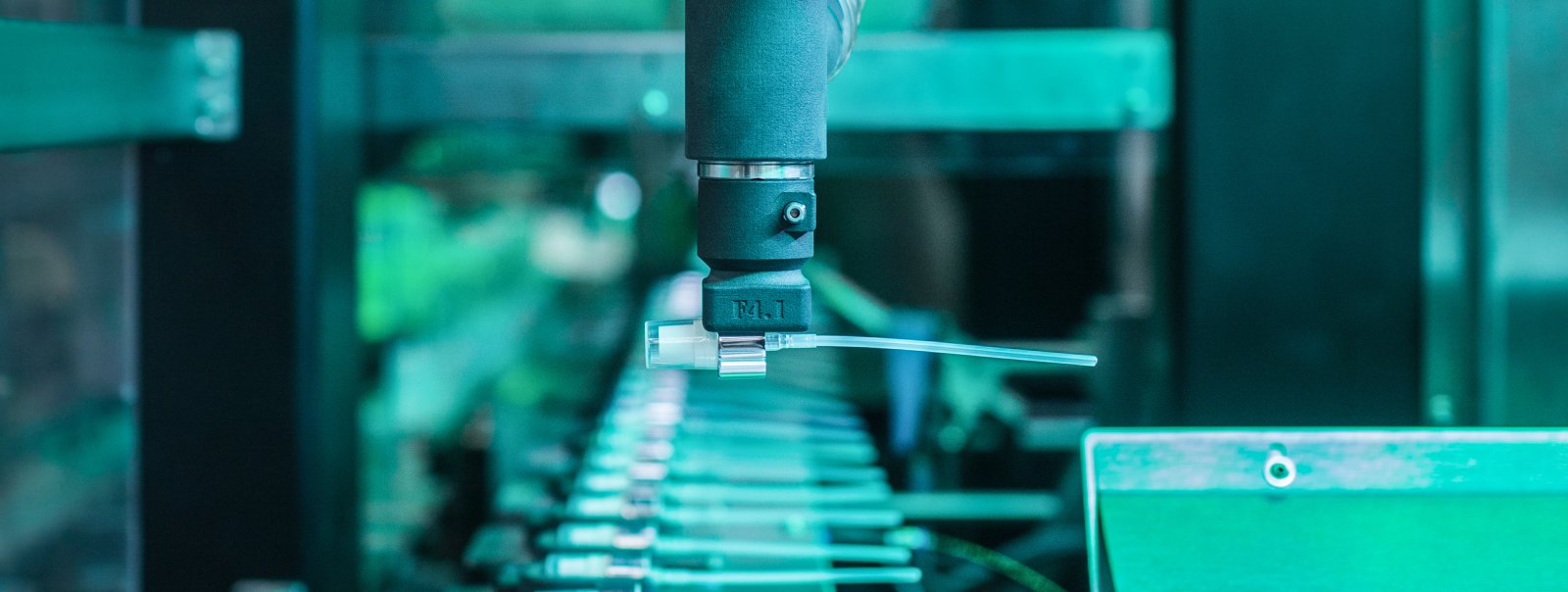
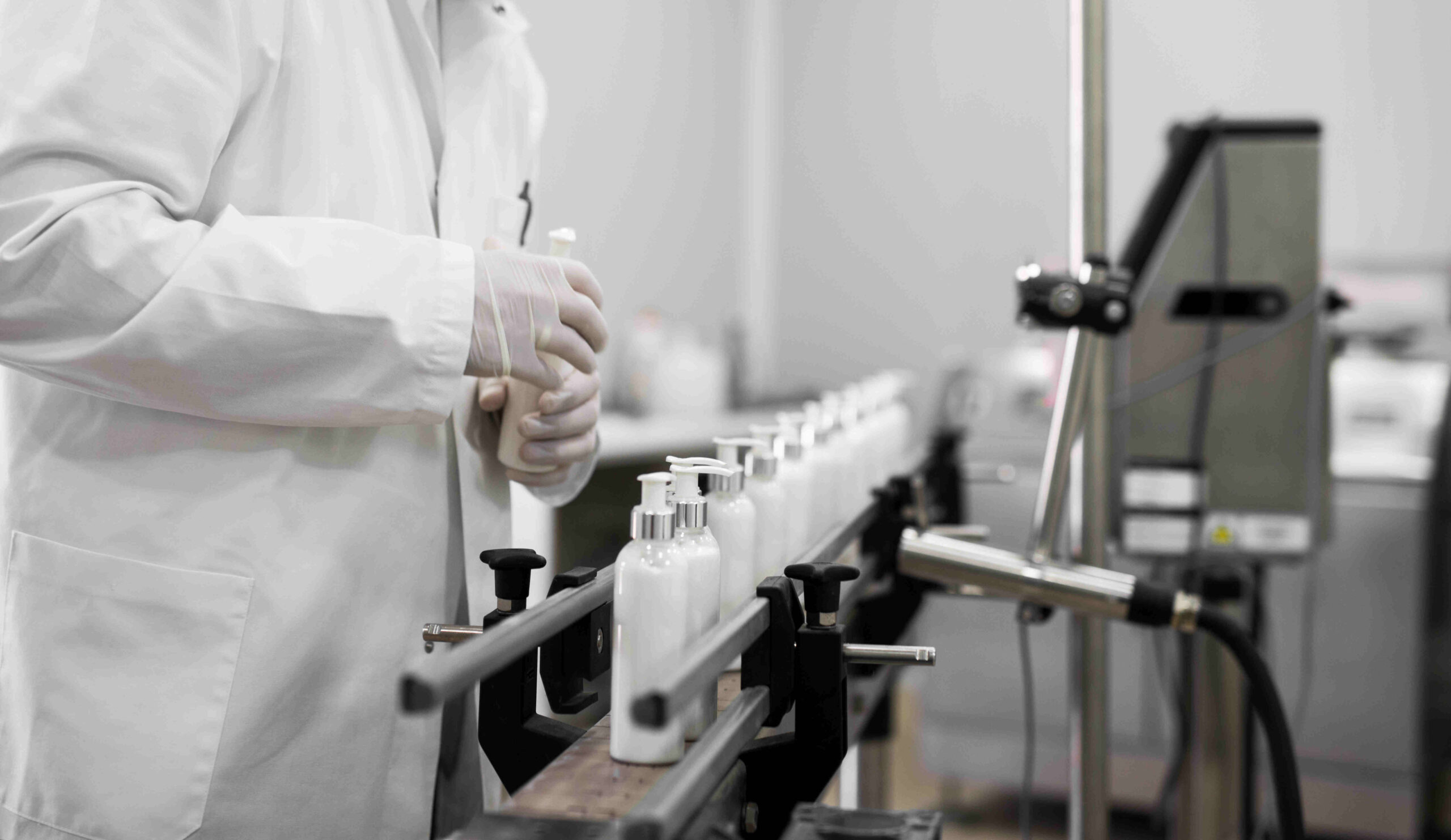
Liquid filling equipment transfers the product into its final containers. The source includes standard bottles and refill packaging, with packaging either manufactured in-house or purchased from an external supplier.
The filling arrangement depends on the packaging type. A bottle filling machine should not automatically be assumed to handle refill packs as well. Confirm compatibility with each proposed container and product before selecting an automatic liquid filling machine.
6. Cap and label the filled containers
After filling, bottles are closed by a capping machine and labelled by a labeller. When specifying an automatic capping machine, confirm that the proposed configuration handles the intended bottle and closure combination.
An automatic labelling line must also be assessed against the chosen packaging format. Filling, closing and labelling requirements should be considered together, even when equipment is purchased in separate stages.
7. Inspect finished products
The source describes random checks of finished products after they leave the production line, to confirm that they meet specifications. These checks form part of packaging line quality control; they do not establish that automated inspection equipment is included.
8. Pack, warehouse and distribute
After quality checks, finished products are packed and transferred to the warehouse. They can then be distributed to stores or other sales channels.
Planning a liquid soap manufacturing business
Research competitors and identify a market position
Review existing liquid soap manufacturers, their product ranges and their prices. Identify whether there is an unmet customer need that your business can realistically address. A clear market position should inform both formulation development and packaging decisions.
Understand the process before investing
Manufacturers need to understand each production stage, even when some activities are outsourced. Establish which formulation method will be used and which operations will take place in-house before requesting equipment proposals.
Build a business plan and marketing strategy
Define company objectives, operating policies, budget and marketing activities. Plan the product name, brand presentation and communication channels, including the company website and social media where relevant.
Liquid soap production may present a business opportunity, but substantial profits are not guaranteed. Commercial viability depends on demand, pricing, costs and how effectively production capacity is used.
Confirm legal and facility requirements
Business registration is only one part of preparation. Confirm the product classification, applicable legal obligations, facility requirements and sanitary standards in each intended market. Establish which registrations, safety documentation, approvals or certificates are actually required rather than assuming a single checklist applies everywhere.
Recruit the necessary specialists
The production process involves several roles, including chemists responsible for formulation, machine operators and packaging personnel. Recruitment plans should reflect the operations the business will perform internally.
Selecting a liquid soap filling machine and supporting equipment
Match machinery investment to realistic production requirements and expected growth. The source recommends starting at an appropriate scale and increasing investment as the business develops.
Its equipment examples list the following maximum speeds. These are source-reported figures, not confirmed performance guarantees for a particular soap or packaging format:
- Unilogo Cosmoline 40: up to 40 pcs/min.
- Futureproof 60: up to 60 pcs/min.
- Futureproof 120: up to 120 pcs/min.
Confirm current model availability and the operating conditions behind these figures with UNILOGO. Product properties, fill volume, container format and line configuration must be considered when assessing achievable output.
When evaluating a bottle filling and capping line, establish which operations are included in the quotation. The source describes UNILOGO production lines that automate dispensing, capping and labelling, but this does not mean every configuration includes all three.
For an automated production line, discuss the relationship between filling, closing and labelling rather than selecting each stage on nominal speed alone. Also confirm packaging compatibility and the scope of equipment supply; packaging machinery should not be assumed to include formulation, water treatment or bulk mixing systems.
Alongside machinery selection, identify reputable ingredient suppliers and choose packaging that is attractive and easy to use. Assess the product, container, closure and label together before committing to equipment.
Next steps for liquid soap production
A practical start-up plan connects the formulation, laboratory testing, production process, packaging and business budget. Equipment selection should follow these requirements rather than determine them.
To discuss suitable production equipment, contact UNILOGO with your intended product, packaging formats and output requirements. Fill out the form to arrange a consultation and request a quotation.