



Explore the equipment used to prepare and package cosmetics, from homogenising mixers to filling, capping and labelling systems, with practical considerations for hygiene and format changes.
A cosmetic production line must support accurate formulation, appropriate hygiene controls and consistent processing. Equipment selection covers two distinct stages: preparing the bulk cosmetic product and packaging it for sale. Each stage requires machinery suited to the product and its production requirements.
This article explains the role of mixing, filling, capping and labelling equipment, alongside the cleaning and changeover considerations that influence machinery selection.
Cosmetics manufacturing: hygiene and formulation control
Cleanliness and sanitation are essential throughout cosmetics manufacturing. Appropriate hygienic conditions should not be confused with a universal requirement for sterile production rooms: the conditions needed depend on the product and applicable requirements.
Hygiene controls extend beyond the machinery itself. They cover production premises, personnel, raw materials and packaging. Documented hygiene plans should define acceptable conditions, inspection procedures and the actions to take when limits are exceeded.
Accurate formulation is equally important. Incorrect ingredient proportions can result in an out-of-specification batch, financial losses or potential risks to customers. Reproducibility depends on controlling the formulation and process rather than relying on equipment alone.
Staff need training in hygiene, manufacturing procedures and production quality control. Batch testing against product specifications is another important control. The source describes factories using their own laboratories for this purpose; this should not be interpreted as a universal requirement for every manufacturer to maintain an in-house laboratory.
What ISO 22716 means for equipment selection
ISO 22716 provides guidelines for cosmetic good manufacturing practices. It concerns manufacturing practices, not certification of individual cosmetic products. It should not be presented as a guarantee of identical batches or the elimination of every mix-up risk.
Equipment should support controlled processing, effective cleaning and maintenance. Accessible machine surfaces, avoidance of difficult-to-clean crevices and access to the floor beneath equipment are useful design considerations. Purchasing the latest machinery does not, by itself, establish conformity with ISO 22716.
From bulk preparation to a cosmetic packaging line
Homogenising mixers for product preparation
The first stage is manufacturing the cosmetic itself. Homogenising mixers are one type of equipment used to prepare make-up and skincare products. The source gives a capacity range of 20–2500 litres, depending on the model; the relevant models and their current specifications require confirmation.
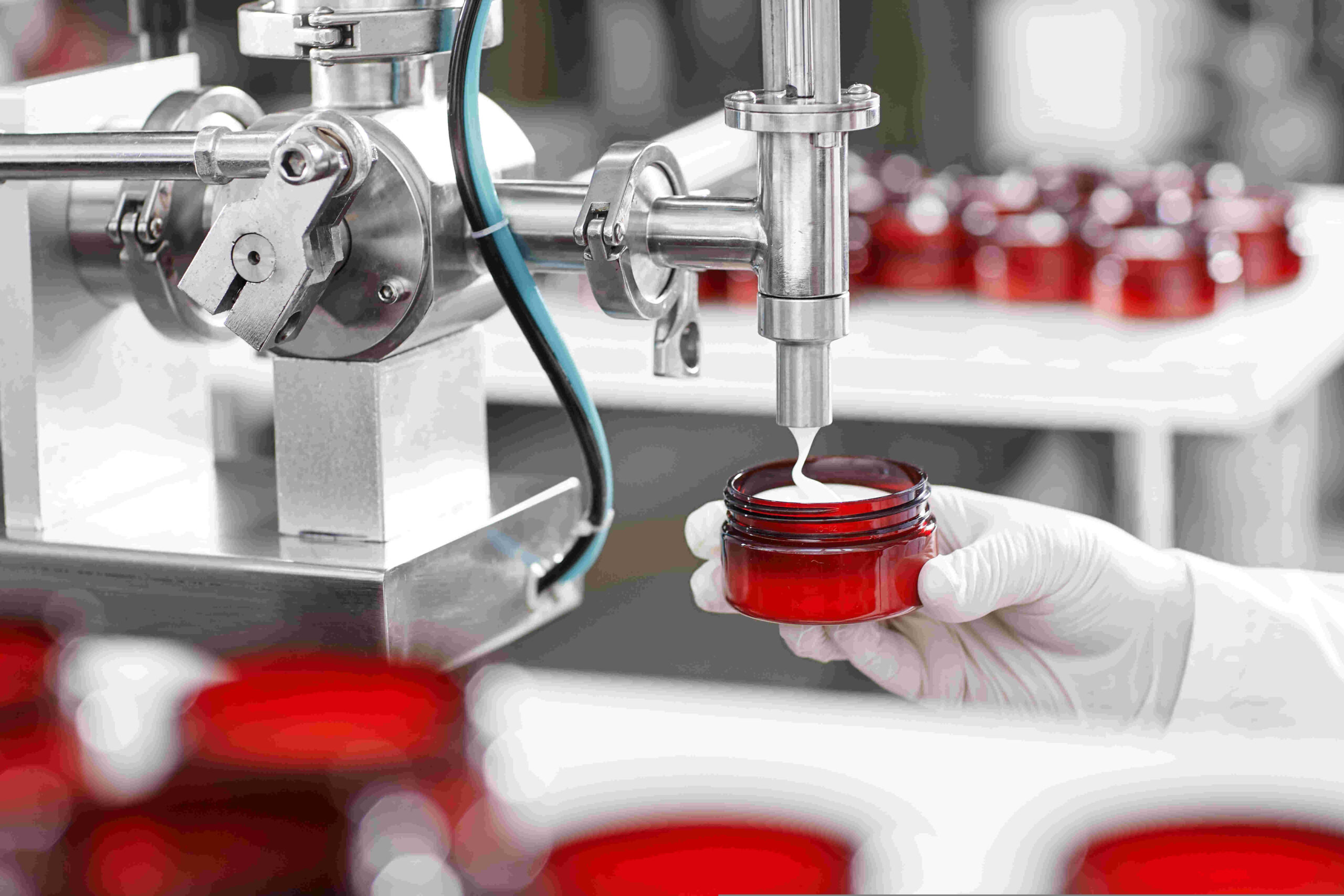
Bulk preparation and finished-product packaging are separate operations. A mixer prepares the product, while a cosmetic filling line transfers the prepared product into individual containers before subsequent packaging steps.
Filling, closing, labelling and secondary packaging
A cosmetic packaging line can bring together several operations:
- Filling and dosing equipment: dispenses the specified quantity into each individual pack.
- Closing equipment: applies the required container closure.
- Labelling equipment: applies labels to the filled containers.
- Secondary packaging equipment: places individual packs into larger packs for handling and distribution.
The source identifies two UNILOGO systems for filling and closing cosmetics. The figures below are specifications reported in the imported article and should be confirmed against current machine documentation before equipment selection.
Cosmoline 40 for liquid cosmetic products
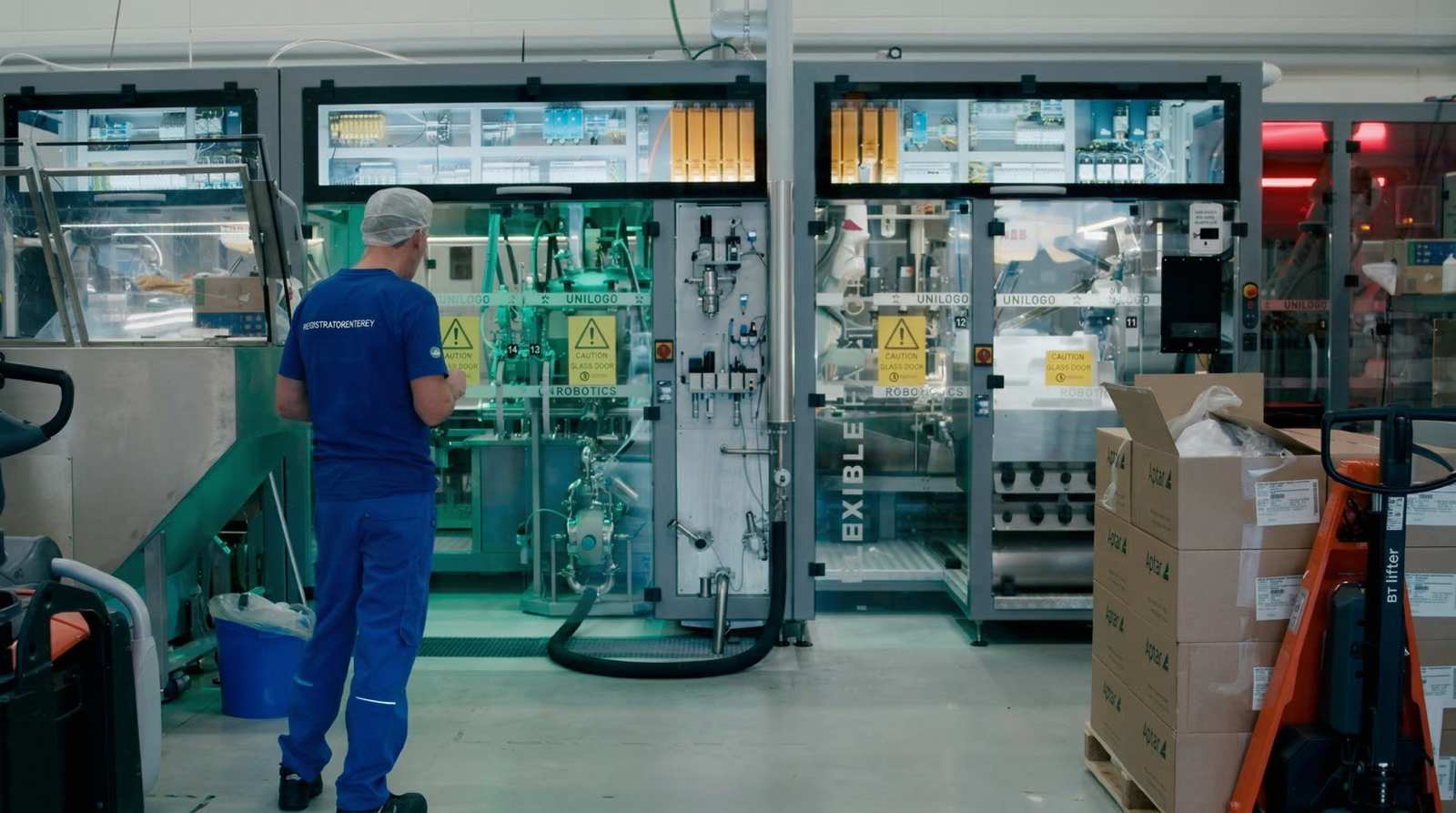
The Flexibleline 70 is described as an integrated filling and labelling line that also caps liquid cosmetic products. Reported applications include liquid soaps, shampoos, emulsions and tonics, with support for a variety of packaging shapes.
The source reports an output of 30–40 pieces per minute. Buyers evaluating a shampoo filling machine or liquid soap filling machine should confirm the applicable product properties, containers, closures and operating conditions behind this figure.
Creamline 30 for dense products and small doses
The Cleanline 70 is described as a system for dispensing very dense products, such as creams, and capping their containers. The source reports doses as small as 5 ml and an output of 30 pieces per minute.
When selecting a cream filling machine, confirm the required dose, product characteristics and container format. The source does not establish that the stated minimum dose and output apply simultaneously to every configuration.
Adapting equipment to new products and packaging
Changes in product ranges and pack sizes do not necessarily require an entirely new production line. Existing machinery may be adaptable, but this depends on the new product, container, closure and equipment configuration.
A multi format packaging line can be relevant where production involves short runs and frequent packaging changes. Compatibility should be assessed for each proposed format rather than assumed across all products.
The source describes Cosmoline 40 as designed for short production runs and frequent changes. It reports packaging changeover in less than 30 minutes without tools. For a rapid format changeover requirement, confirm which formats, adjustments and replacement parts are covered by the stated tool free changeover system, and whether cleaning time is included.
Choosing a cosmetic production line
Start with the formulation, required batch size, filling quantity, packaging format and production schedule. Assess bulk preparation separately from filling and packaging, then check how the stages will work together. Cleaning access, maintenance and staff procedures remain important alongside output and format flexibility.
Where standard equipment does not meet the required parameters, custom packaging machinery may be an option. UNILOGO's source article offers customised solutions tailored to the product. Use the Discuss Your Project form to discuss the application and confirm current specifications before selecting equipment.