





Learn how robotic assembly lines coordinate equipment, where industrial robots are used, and what to consider when assessing productivity, safety and investment.
A robotic assembly line uses industrial robots to carry out production tasks within a coordinated system. Robots can be integrated into new equipment or added to existing lines as part of production line modernization. Their value depends on the application: suitable robot selection, tooling, programming and integration are essential to achieving useful results.
This guide explains how a robotic automated production line works, its potential benefits and the practical considerations behind an investment.
Contents
- What are industrial automation and robotic assembly lines?
- Benefits and safety considerations
- Applications for assembly line robots
- Selecting a robotic production line
What are industrial automation and robotic assembly lines?
Industrial automation uses control systems to coordinate machines and production processes with reduced manual intervention. An automated production line combines equipment whose operations must work together. This approach is used across industries, including food manufacturing and automotive production.
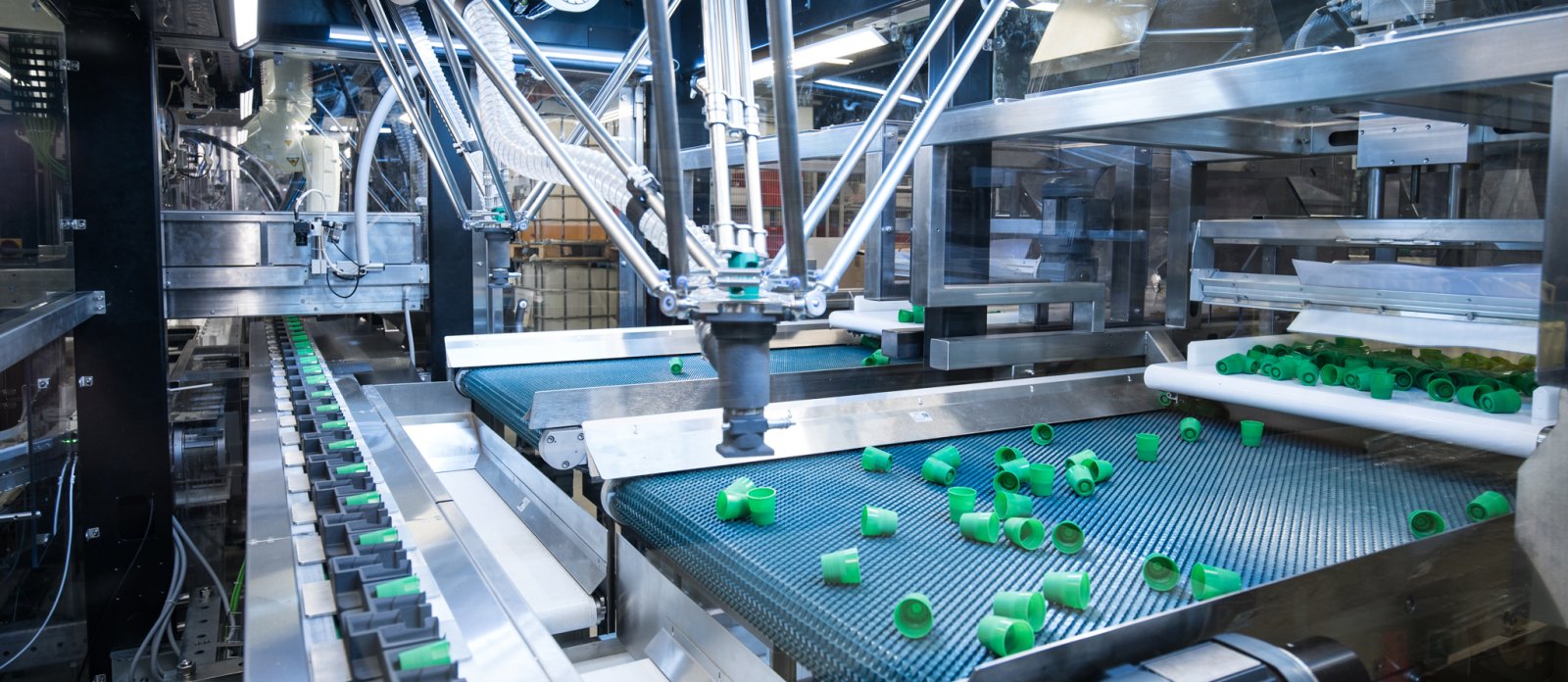
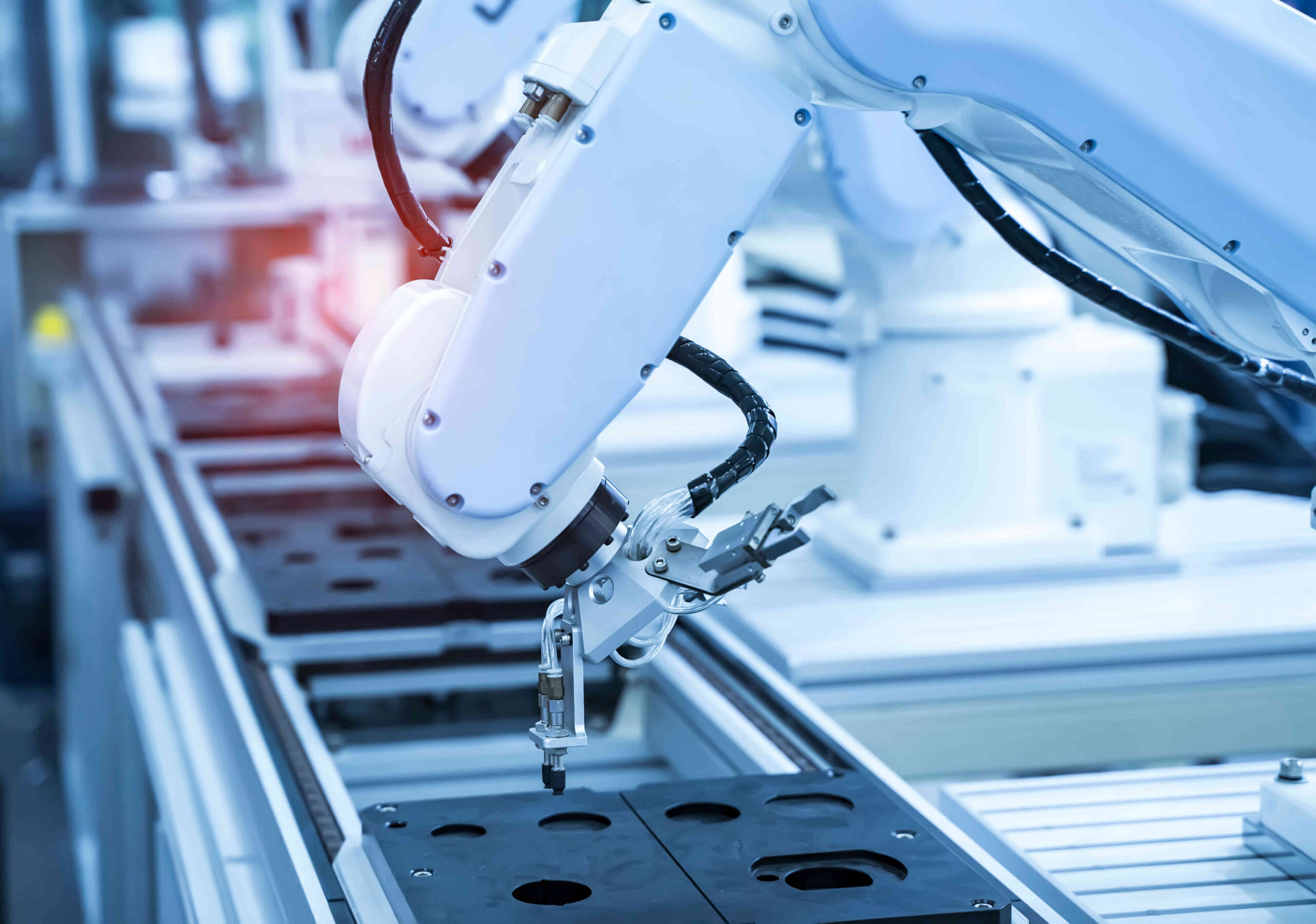
A robotic assembly line incorporates industrial robots into that coordinated process. Although the term refers to assembly, robotic production systems can also carry out welding, painting, sorting and material handling. Automotive body welding is one established example.
How robots work within the line
Industrial robots perform programmed movements using tools selected for the task. Different tooling and programs allow robots to undertake different operations, and a suitable configuration may carry out several activities in sequence.
Industrial automation integration connects these robot operations with the surrounding equipment. Whether the project involves a new installation or an existing line, the robot must operate as part of the overall production process rather than as an isolated machine.
Benefits and safety considerations
Productivity, precision and repeatability
Robots can perform repetitive tasks consistently and, in suitable applications, improve production speed. However, operating speed depends on factors such as robot design and the weight of the installed tooling. A robot's maximum movement speed does not, by itself, establish the output of the complete line.
Repeatable movements can support consistent production, but repeatability is not a guarantee of accuracy or defect-free products. Tooling, programming and the production process also affect the result. Improvements in quality and reductions in waste therefore need to be assessed for the specific application.
Robots do not experience human fatigue, but robotic lines still require maintenance and may stop for faults, tooling changes or other production needs. Productivity assessments should account for this downtime rather than assume uninterrupted operation.
Task flexibility and worker exposure
Programmable movements and interchangeable tooling can make robots useful for a range of tasks. This flexibility may be valuable when compared with a dedicated mechanical arrangement, although the better solution depends on the operation.
Robots can also reduce workers' direct involvement in repetitive, physically demanding or hazardous tasks. Welding and painting illustrate applications where automation can reduce exposure to harmful fumes. This does not remove the need for appropriate process controls and protective measures.
Guarding and collaborative robot safety
Robotic lines often use perimeter fencing with interlocked access points. Guard interlocking, guard locking where required, stopping time and safe access must be considered together. Opening or unlocking a gate must not be assumed to make every hazard immediately safe.
Collaborative robots, or cobots, may be used in applications involving people working nearby. However, a speed of 250 mm/s is not a universal limit for all collaborative applications, and low speed alone does not prevent serious injury.
Safety depends on an application-specific risk assessment, including the tooling, payload, possible contact conditions and protective measures. Contact detection, stopping behaviour and other safety functions vary by system and configuration; they must not be assumed from the collaborative robot label alone.
Applications for assembly line robots
Industrial robots can undertake tasks that would otherwise involve prolonged repetition, substantial physical effort or exposure to harmful substances. Applications include:
- Assembling components, including bolting operations.
- Sorting products.
- Loading parts onto production equipment and unloading them.
- Palletising finished products.
- Welding and painting.
- Supporting parts manufacturing and tending computer numerical control (CNC) machines.
Automating these activities may allow operators to focus on other work. The appropriate division of tasks depends on the process and the equipment selected.
Selecting a robotic production line
A robotic line can require substantial initial investment, but it is not necessarily more expensive than every conventional alternative. Its economic value depends on the task, utilisation, integration requirements and ongoing operating costs.
When comparing production automation solutions, assess the required operations, tooling, operating speed, quality requirements, safety measures and maintenance needs together. Consider whether a robot should be integrated into the existing line or whether a new line better addresses the production requirement.
Relevant completed-project references can help inform discussions, but they do not establish suitability for a different application. To discuss your requirements with UNILOGO and request relevant project information, use the Discuss Your Project form.