


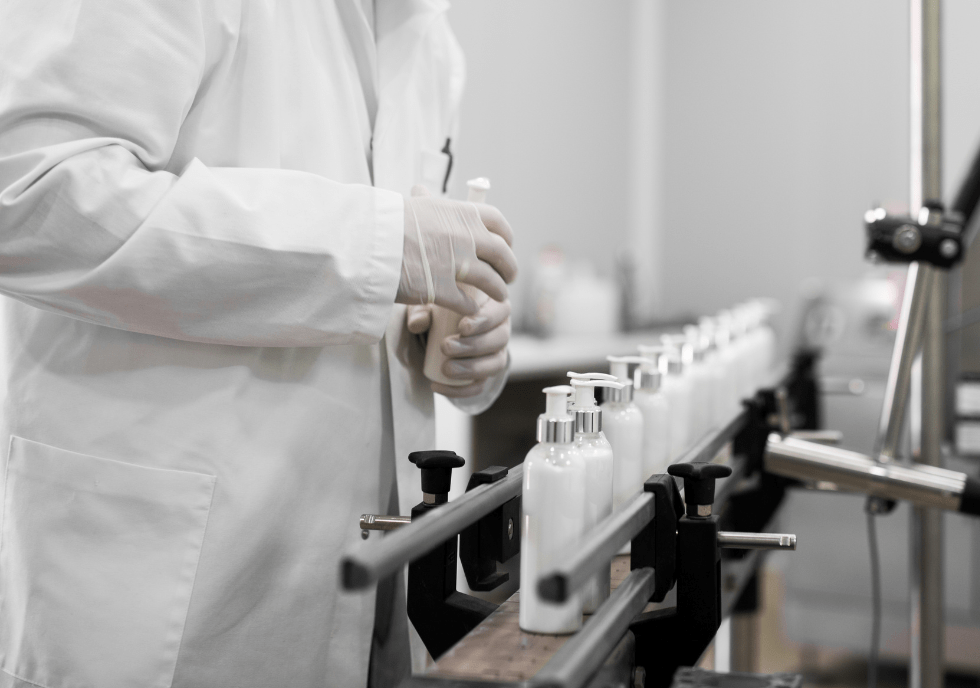


Explore the main stages of cosmetics manufacturing, from formulation and raw-material planning to mixing, hygienic filling, capping, labelling and finished-product storage.
Planning a cosmetic production line starts well before selecting machinery. Manufacturers need to coordinate product formulation, safety assessment, packaging design, raw-material supply and production hygiene. Filling, capping and labelling equipment must then be selected around the product, its containers and the intended production scale.
This step-by-step overview explains the main planning stages. Specific legal obligations, testing requirements and hygiene procedures must be confirmed for the product category and intended market.
Contents
- Cosmetics production planning and logistics
- Manufacturing the cosmetic material
- Filling, capping and labelling cosmetics
- Bringing the manufacturing process together
Cosmetics production planning and logistics
Define the formulation, packaging and testing needs
The first step is to develop a formulation that delivers the intended performance and is safe for its intended users. Packaging and labelling should be considered alongside formulation development, rather than treated as final design tasks.
The container must provide appropriate product protection and an effective closure. Its design depends on the cosmetic product category and the characteristics of the formulation.
Manufacturers must determine which assessments and tests are needed to establish product safety. Dermatological and application tests may form part of this work, but neither should be treated as a universal requirement for every cosmetic product and market.
Shelf-life determination also requires appropriate supporting evidence. Formulation stability, microbiological safety and packaging compatibility are relevant considerations; composition and container choice alone do not establish a reliable shelf life. Applicable expiry-date or period-after-opening labelling requirements should be checked for the intended market.
Plan raw-material supply, storage and transport
A dependable supply of the required raw materials is essential. Even a well-designed cosmetic production line cannot operate as planned if manufacturing materials are unavailable.
Finished-product storage and transport should also be addressed early. Identify applicable requirements and establish product-specific handling conditions before production begins.
FEFO, or First Expired, First Out, is an inventory-management approach in which stock with the earliest expiry date is dispatched first. Where applicable, warehouse layouts should support access to individual batches and straightforward monitoring of expiry dates.
Temperature, humidity and ultraviolet exposure can affect cosmetic quality and stability. Storage and transport limits should therefore follow the conditions established for the particular product, rather than assumed industry-wide values.
Manufacturing the cosmetic material
Establish production hygiene procedures
Before manufacturing begins, the production environment and procedures must meet the applicable hygiene requirements. Depending on the process and facility, controls may include designated clean areas, restricted access for authorised personnel and specified protective clothing.
Where clothing cleanliness checks are part of the facility's procedures, their requirements should be defined. Dedicated clean zones and cleanliness-tested clothing should not be assumed to be universal requirements for every cosmetic manufacturing operation.
A documented hygiene plan should specify cleaning procedures, relevant monitoring methods, acceptance limits and corrective actions when those limits are exceeded. These controls need to reflect the actual manufacturing environment.
Select mixers for the process and production scale
Specialised mixers are used to prepare the cosmetic material. Selection depends on the process requirements and the scale of production.
Equipment can range from simple non-pressure mixers with a single central stirrer to more complex homogenising mixers equipped with multiple stirrers and sophisticated controls. These examples illustrate different configurations, rather than a universal classification of all cosmetic mixing equipment.
Whatever the configuration, assess how easily the mixer and tank can be cleaned. Cleanability is an important selection criterion because hygiene controls apply to both the production premises and the equipment.
Filling, capping and labelling cosmetics
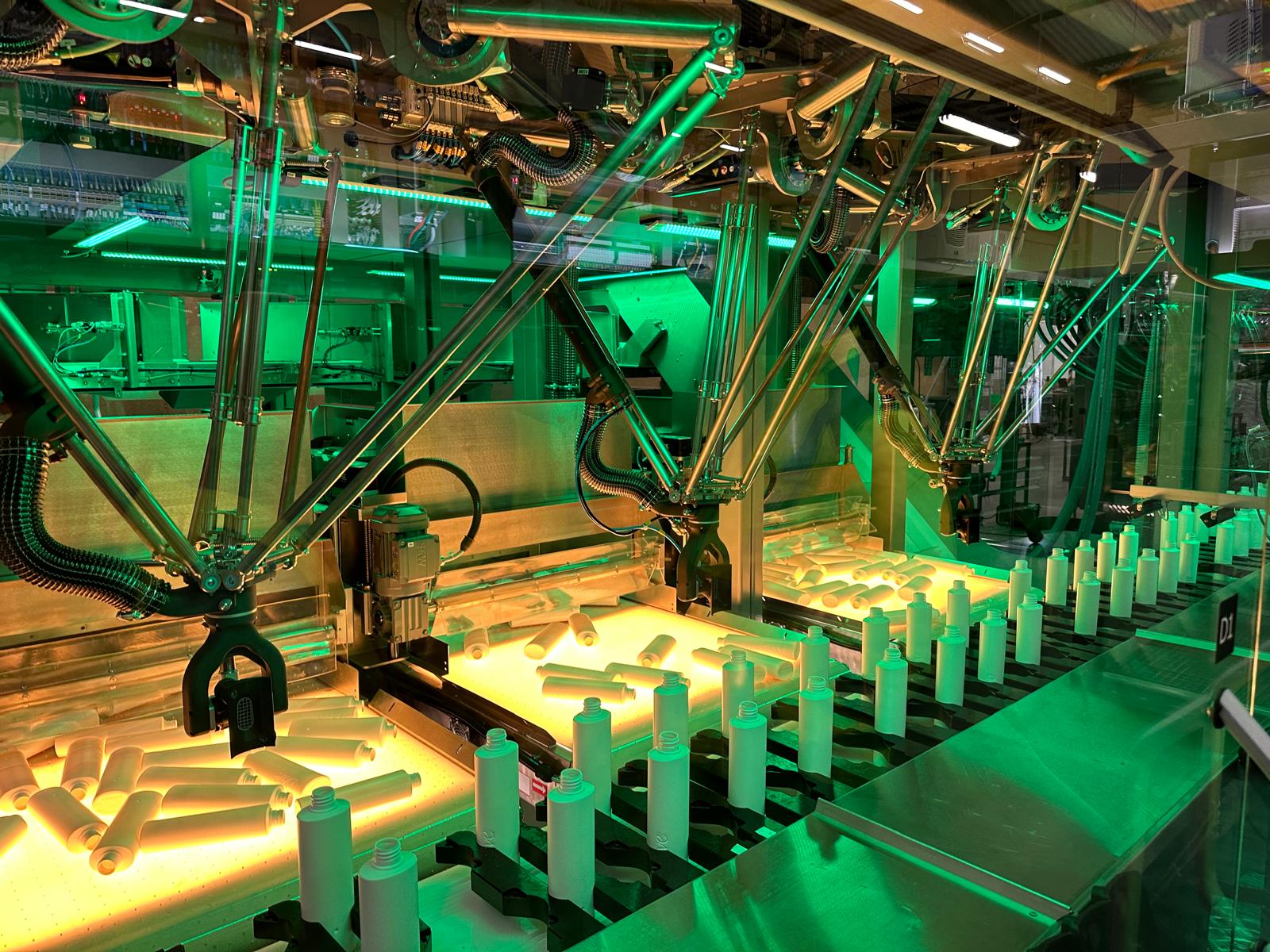
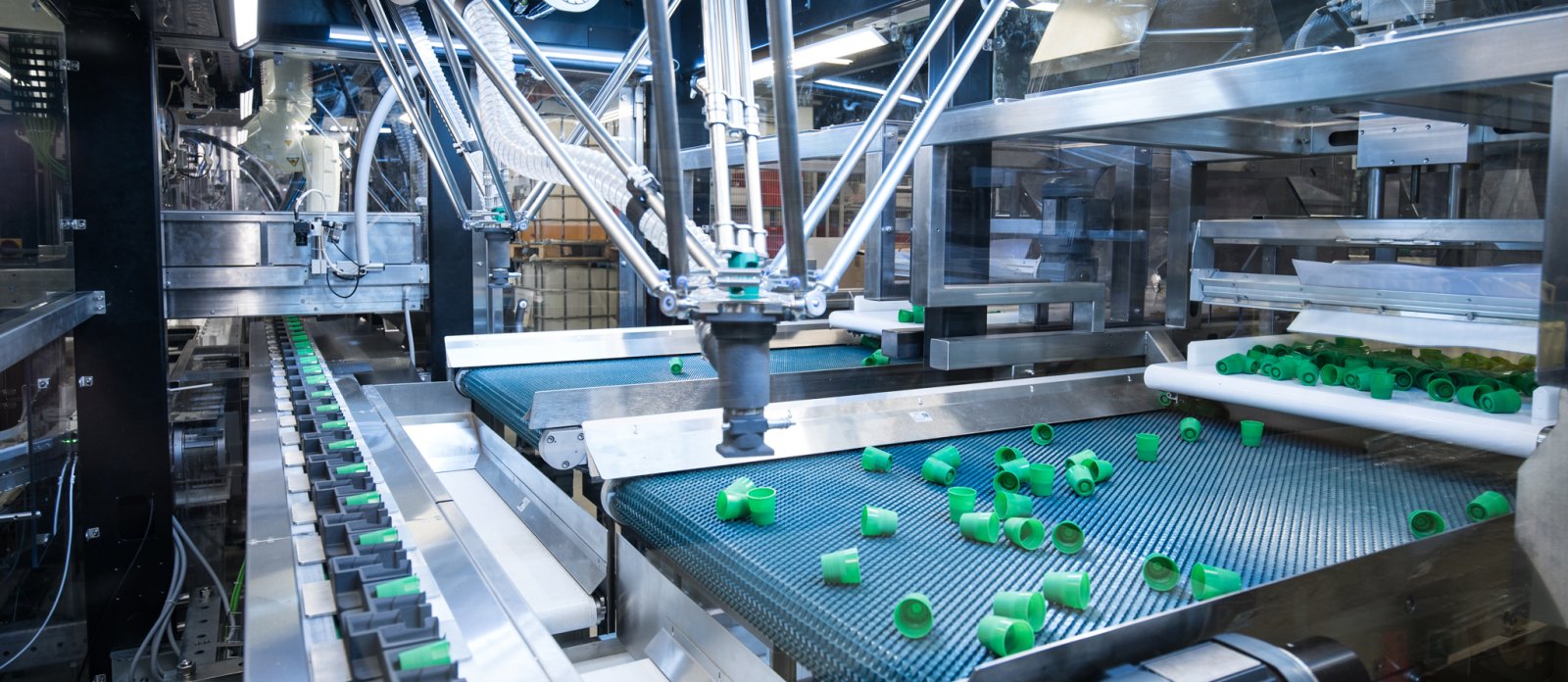
The cosmetic packaging line transfers the prepared product into individual containers, such as bottles, jars or flasks, before closing and labelling them. These operations form the final manufacturing stage described here.
Match packaging equipment to the product and container
A cosmetic filling line should be planned around the formulation and selected packaging. When evaluating a cosmetic filling machine, establish which containers it must handle and how it will fit into the overall packaging process.
For bottled products, bottle filling machine selection should be coordinated with bottle capping machine and labelling requirements. Liquid filling equipment should likewise be assessed against the actual product and process needs; compatibility should not be assumed from the equipment name alone.
Packaging equipment must be accessible for cleaning. Its materials should also be checked for compatibility with the cleaning agents, disinfectants, concentrations and procedures that the facility intends to use.
Define packaging line quality control checks
Packaging line quality control should address:
- Whether each container contains the correct fill quantity.
- Whether the closure is correctly applied and provides the required seal.
- Whether the label is positioned correctly.
- Whether printed information meets the required quality standard.
The inspection methods and acceptance criteria must be defined for the process. These checks do not, by themselves, imply automated inspection or a validated seal-integrity test.
Bringing the manufacturing process together
Successful cosmetics manufacturing connects formulation development with testing, supply planning, hygienic processing and packaging. Finished-product quality control must also confirm conformity with the approved formulation, not just the appearance of the packaging.
Before discussing equipment with a packaging line manufacturer, define the product characteristics, container types, hygiene requirements and intended production scale. These details provide a practical basis for evaluating filling, capping and labelling equipment.
To discuss machinery for packaging cosmetic products, explore Unilogo or use the Discuss Your Project form to discuss your requirements with the team.