






Explore pharmaceutical processing and packaging equipment, from mills and tablet presses to capping and labelling machines, with key considerations for machinery selection.
Pharmaceutical manufacturing machines support a wide range of operations, from preparing ingredients to packaging finished medicines. Equipment selection depends on the formulation, dosage form, contamination risks, cleaning procedures and applicable regulatory requirements.
This overview explains an illustrative solid-dose manufacturing process and the machinery used at each stage. It also examines packaging equipment, including what to consider when selecting a bottle capping machine.
- Automation and production integration
- Machinery requirements and cleanability
- Solid-dose manufacturing and packaging equipment
- Choosing machinery for the application
Automation and production integration
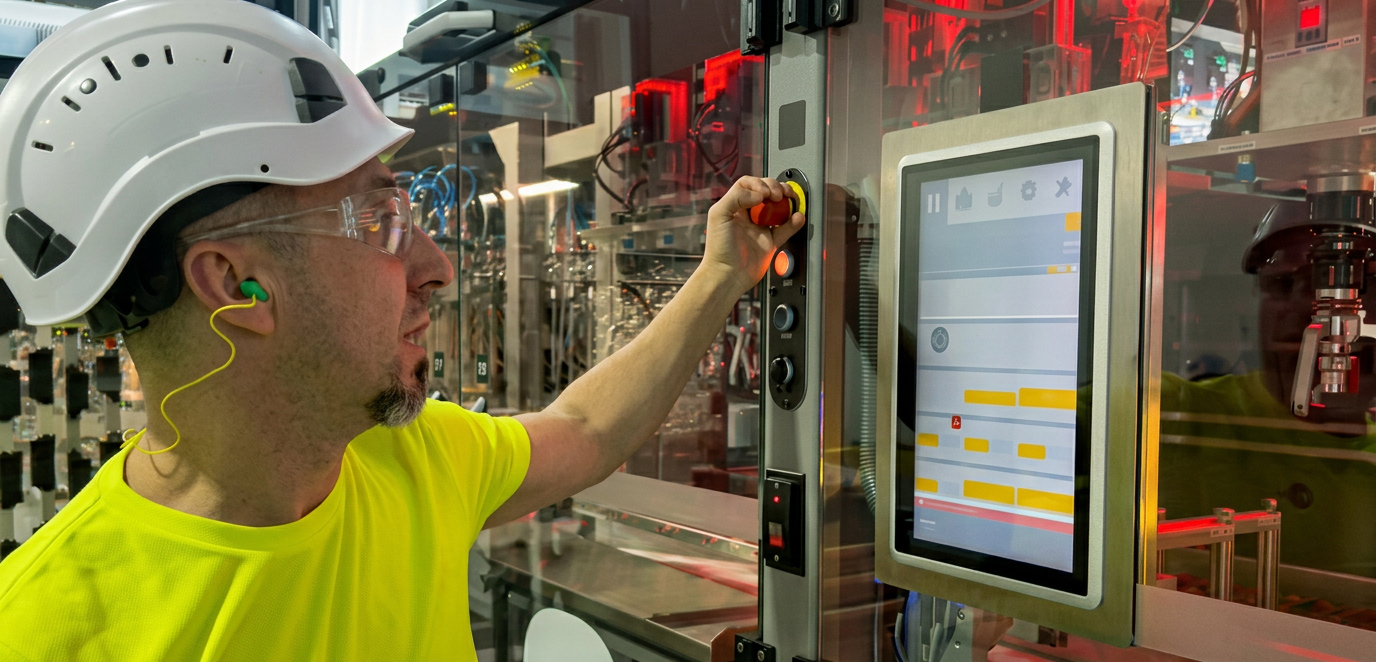
An automated production line can connect processing equipment, control and measurement systems, and manufacturing software. This integration helps manufacturers coordinate operations and monitor process conditions rather than manage each machine in isolation.
Depending on the installation, software may also support quality control, production supply planning and the movement of finished medicines. The required level of industrial automation integration should be defined around the process and the information that must pass between machines and management systems.
Automation alone does not establish pharmaceutical compliance. Equipment, controls and operating procedures must be assessed together for their intended use.
What requirements must pharmaceutical manufacturing machines meet?
Materials and hygienic design
Stainless and acid-resistant steels are commonly used in pharmaceutical equipment, but they are not a universal requirement for every component. Material selection must account for product contact, cleaning agents and operating conditions. Material choice alone does not establish compliance with Good Manufacturing Practice (GMP).
Equipment should allow effective cleaning and maintenance. Access beneath and around machines can help, but the appropriate frame and mounting arrangement depends on the installation. Bearings and lubrication points require contamination controls; a blanket prohibition on all lubricants or open bearings is not an adequate design specification.
Cleaning methods and electrical protection
Cleaning requirements are application-specific. A line should not be assumed to tolerate complete washdown simply because it is used for pharmaceutical production. Electrical equipment and control cabinets need protection appropriate to the agreed cleaning method and operating environment.
Applicable equipment legislation
The source identifies the Machinery Directive, Pressure Equipment Directive and ATEX Directive as relevant considerations. Their applicability, current legal status and any transitional arrangements must be checked for the equipment, destination market and intended operating environment. Pressure-equipment and explosive-atmosphere requirements do not automatically apply to every pharmaceutical machine.
Solid-dose manufacturing and packaging equipment
The following sequence illustrates the manufacture of some tablets and capsules. It is not a universal process for all medicines, and individual formulations may require different operations or omit certain stages.
Milling, weighing and mixing
Mills reduce the particle size of ingredients where required. The source mentions conical and air mills; the appropriate milling technology depends on the material and process specification.
Ingredients are weighed, excipients are added, and the formulation is mixed in defined proportions. Mixers, granulators and dryers perform different functions. Some equipment configurations combine operations, but this capability should be confirmed for the specific machine rather than assumed for mixers generally.
Tabletting and capsule filling
Tablet presses compress a measured quantity of material within a die to form tablets. Capsule-filling machines place a specified formulation into empty capsules; depending on the equipment and product, this may include powders, small particles or tablets.
Throughput must be established for the selected machine, formulation and operating conditions. A generic production figure is not sufficient for capacity planning.
Coating where required
Some tablets or capsules receive a coating to help protect them against external influences such as light or moisture, or to improve appearance. Coating is not required for every product. Coating pans and fluid-bed equipment are examples of equipment to assess against the formulation and intended coating process.
Primary packaging and bottle capping
Primary packaging options include blisters, bottles and jars. Cartons may provide an additional packaging layer, depending on the product and pack design.
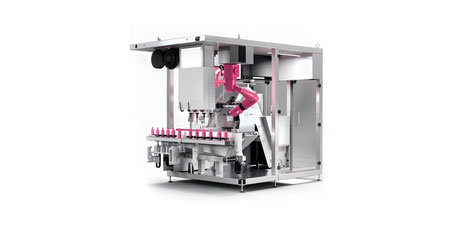
For bottles and jars, a bottle capping machine applies the selected closure. The source references the UNILOGO Flexicapper. Its suitability for a particular pharmaceutical application, container and closure must be confirmed with the supplier.
Closure controls should form part of packaging line quality control, but inspection alone does not guarantee protection against unintended opening or establish child resistance. Closure requirements and acceptance criteria need to be specified separately.
Labelling and variable-data coding
Pharmaceutical packs carry product information and variable data such as batch numbers and expiry dates. Label application and variable-data coding are distinct functions, even when integrated into the same industrial packaging line.
The source identifies the Flexibleline 70 labeller for round packs and the Flexibleline 70 labeller for bottles, jars and flat packs. These stated formats and their pharmaceutical applications require supplier confirmation. Market-specific labelling, coding and any serialization requirements must also be established.
Secondary packaging and palletising
Finished packs may be grouped into cartons or cases before dispatch. Depending on the packaging specification, automated packaging machinery may support cartoning, case packing, wrapping, strapping and palletising. These are separate operations, and not every line requires all of them.
Choosing machinery for the application
Begin with the product and process specification, then define container formats, closure requirements, cleaning methods, applicable compliance obligations and production-line interfaces. These requirements provide a more reliable basis for selection than material type or automation level alone.
Discuss the application with an experienced machinery supplier and request confirmation of the proposed equipment's capabilities and limitations. Use the UNILOGO contact form to discuss the process and packaging requirements that need to be assessed.