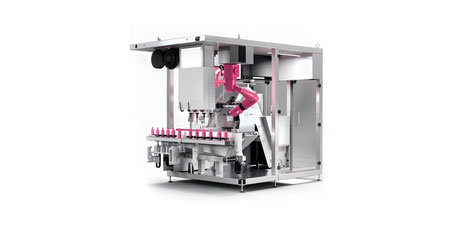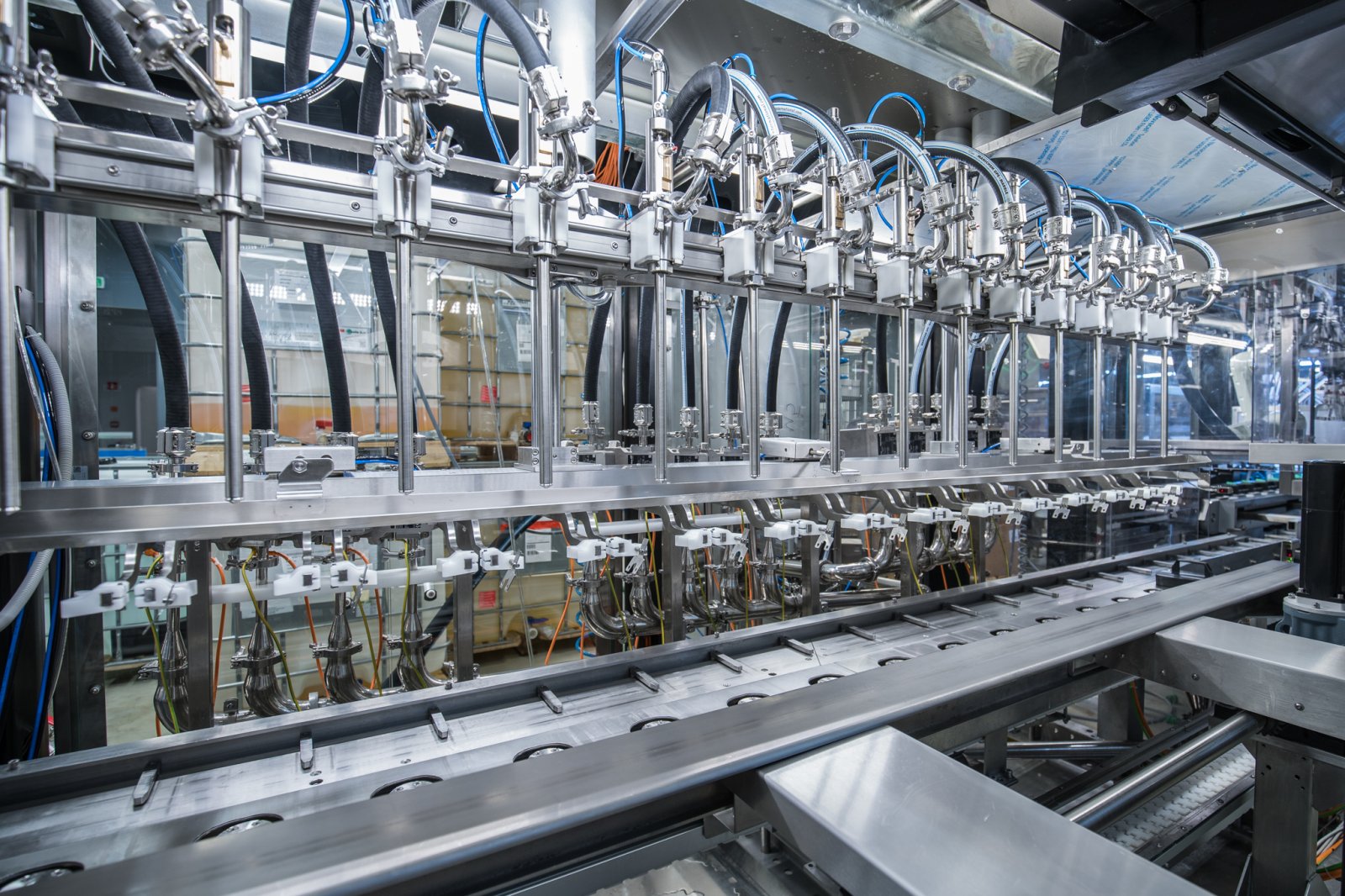







Compare cap feeding systems, tightening heads, spindle mechanisms and operating modes before choosing a capping machine for bottles, jars or other containers.
An automatic capping machine closes bottles, jars and other resealable packaging after filling. Cap delivery and tightening mechanisms vary, so understanding how they work is a useful starting point when choosing equipment for a production line.
This guide explains the main cap feeding systems, tightening mechanisms and applications to discuss with a capping equipment manufacturer.
Table of contents
- How automatic capping machines work
- Tightening mechanisms and operating modes
- Applications and closure requirements
- Capping machine purchasing checklist
- Discuss your application with UNILOGO
How automatic capping machines work
Capping takes place after the container is filled. On a bottle filling and capping line, open containers enter the capping machine, where caps are delivered and tightened, and leave it closed.
Some capping machines also seal the packaging to provide evidence that the contents have not been tampered with after leaving the production line. This additional function is frequently used in pharmaceutical applications.
Pick-off cap delivery
A pick-off cap feeding system uses a chute to dispense caps individually. Containers moving beneath the chute on a conveyor pick up the caps before entering the tightening section. This arrangement is mainly used in linear and rotary capping machines.
Pick-and-place cap delivery
Pick-and-place delivery uses a robotic arm or manipulator moving along two or three axes. A gripper picks caps from a tray and places them on the containers. This system can handle a wide variety of caps and packaging.
Screw-cap application
Once the cap is positioned, the machine tightens it to close the container. For screw caps, the capping mechanism rotates the cap while applying pressure. The mechanism used depends on the type of machine.
Tightening mechanisms and operating modes
Tightening-head machines
The most common type of capping machine uses a tightening head. The head transfers torque to lower and tighten the cap once the container is in position.
These machines are used in both large plants and small-batch production. They are available in automatic, semi-automatic and manual versions. In most cases, tightening-head machines use continuous motion: the container advances along the conveyor while the head screws on the cap.
Spindle capping machines
Spindle capping machines use sets of rotating discs, some of which are powered. When the container is in position, the discs press against the cap and tighten it.
These machines use intermittent motion, meaning that containers stop temporarily on the line during tightening.
Automatic, semi-automatic and manual operation
Alongside the tightening mechanism, consider the level of operator involvement. Tightening-head machines are available in automatic, semi-automatic and manual forms. In a semi-automatic arrangement, the operator places the cap on the container and the machine tightens it.
Applications and closure requirements
Capping equipment is used across several industries:
- Cosmetics: screw-on containers are used to secure beauty products.
- Food and beverages: bottle capping machines serve brewing and bottling operations. Food producers also use screw-top jars and containers for spices, preserves and other products.
- Agriculture: capping machines close containers holding potentially hazardous substances. Automating this work also helps reduce operators' contact with substances that may harm their health.
- Pharmaceuticals: screw-on jars and containers protect medical supplies until they reach patients. Control of the capping process helps manufacturers ensure that containers are properly closed, while some machines also provide tamper-evident sealing.
Capping machine purchasing checklist
Before choosing a bottle capping machine, discuss the following points with the supplier:
- Packaging: identify the bottles, jars and caps the machine will handle.
- Cap delivery: discuss whether pick-off or pick-and-place handling suits the packaging.
- Tightening mechanism: review tightening-head and spindle machines for the intended application.
- Operator involvement: consider automatic, semi-automatic and manual options.
- Container movement: discuss continuous or intermittent operation within the production line.
- Production scale: explain whether the equipment is intended for small batches or a larger plant.
- Additional sealing: if tamper evidence is needed, ask whether the machine includes a suitable sealing function.
Discuss your application with UNILOGO
If you are considering a capping machine for your business, contact UNILOGO using the Discuss Your Project form. Describe your containers, caps and production process so the engineering team can discuss a solution for your company.