

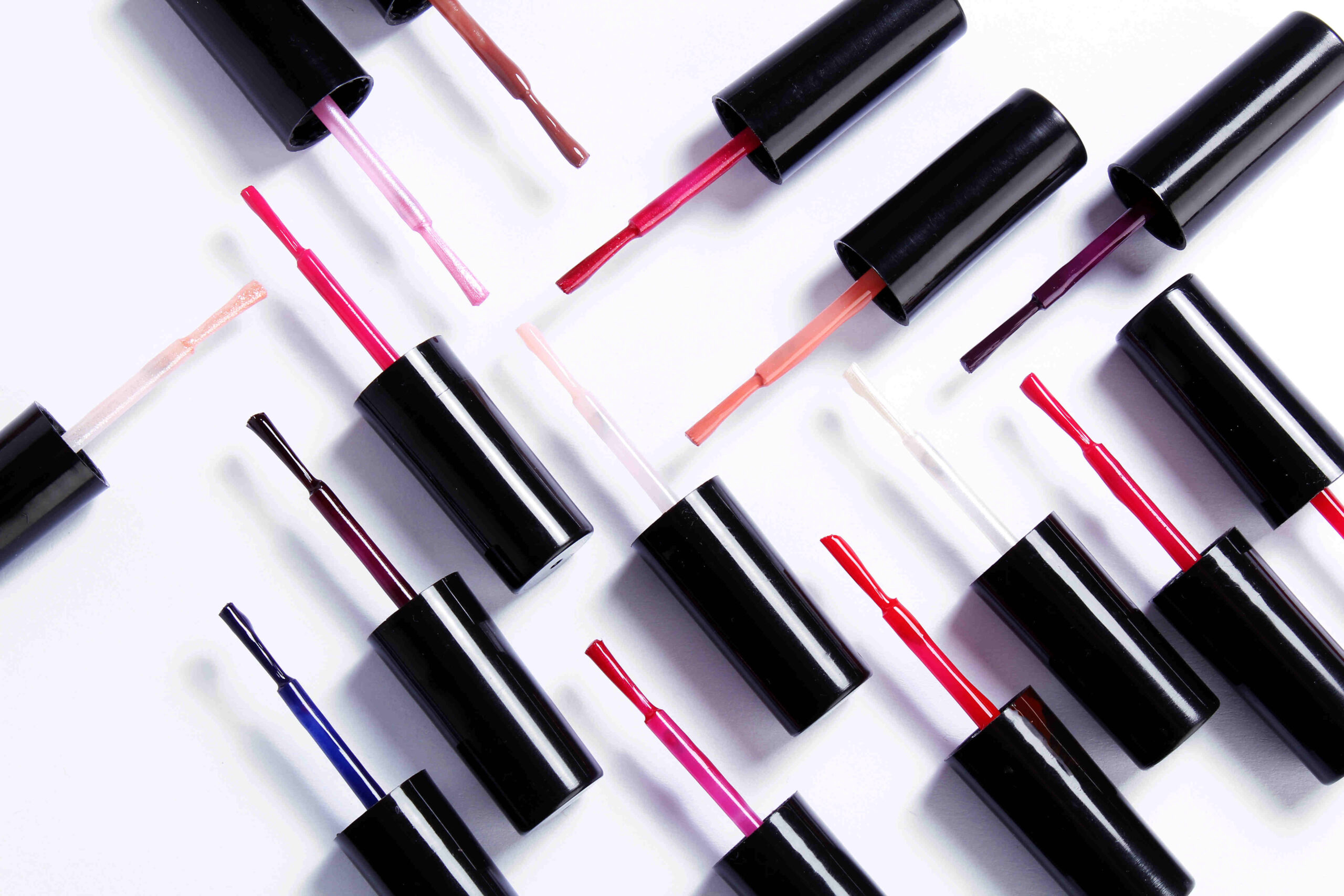


Explore the main stages of nail polish manufacturing, from formulation and pigment preparation to mixing, filling and container closing.
Nail polish manufacturing combines formulation development, pigment preparation, mixing and packaging. Although many cosmetics have been known since ancient times, nail polish manufacturing dates back to the early 20th century. The process produces a decorative and protective coating that must be durable and easy to apply.
What is nail polish?
Nail polishes and nail care enamels are solutions of film-forming substances, such as cellulose esters, with resins and plasticisers in organic solvents. Colourants, pigments and glitter provide decorative effects, while transparent polishes are also available.
When applied, nail polish forms a decorative and protective layer on the nail. Its formulation must support long-lasting wear and easy application, as well as the appropriate hardness, adhesion and flexibility.
Nail polish composition and application properties
Viscosity and application
Appropriate viscosity is an important requirement for nail polish. A properly formulated product should be thixotropic: it should spread easily under the force of a brush to form a thin layer, without running off the nail after application.
Film formers, resins and plasticisers
Nitrocellulose creates a shiny layer with the required hardness and adhesion. Additional polymers used in formulations include polyvinyl acetate and nitro starch.
Resins improve adhesion to the nail plate and the hardness of the coating. Examples include natural resins such as damar, copal and rosin, as well as synthetic methacrylate and polyvinyl resins.
Plasticisers add flexibility and help prevent the polish from wrinkling after the solvent evaporates. These include solvent-based plasticisers, mainly high-molecular-weight esters, and non-solvent plasticisers, also called softeners.
Solvents, colourants and pigments
Solvents account for approximately 80% of the weight of the polish. Mixtures of low-, medium- and high-boiling-point solvents are commonly used to reduce drying time and increase gloss. Solvents are also combined with thinners, mainly to reduce manufacturing costs.
Nail polish can contain colourants soluble in the solvent mixture. Enamels use insoluble inorganic pigments and lakes. Surfactants are also added to help prevent the colouring material from settling into lower layers of the liquid.
Main stages of nail polish manufacturing
Nail polish production requires specialist knowledge and suitable machinery. Once the formulation has been developed, the ingredients are combined in carefully selected proportions through several stages.
- Prepare the binder. Dissolve nitrocellulose and resins in a selected mixture of volatile ingredients to obtain the required solution consistency.
- Produce colour pastes. Grind pigments and softeners into a colour paste. Double- or triple-drum mills are commonly used for this stage.
- Adjust the colour. Combine the prepared pigment pastes in a mixer to achieve the required shade.
- Combine the pastes and binder. Add the colour pastes to mixers containing the binder and mix until a homogeneous substance is obtained.
- Fill and close containers. Dispense the finished polish into individual containers and close them using dedicated packaging machinery.
Filling and capping nail polish containers
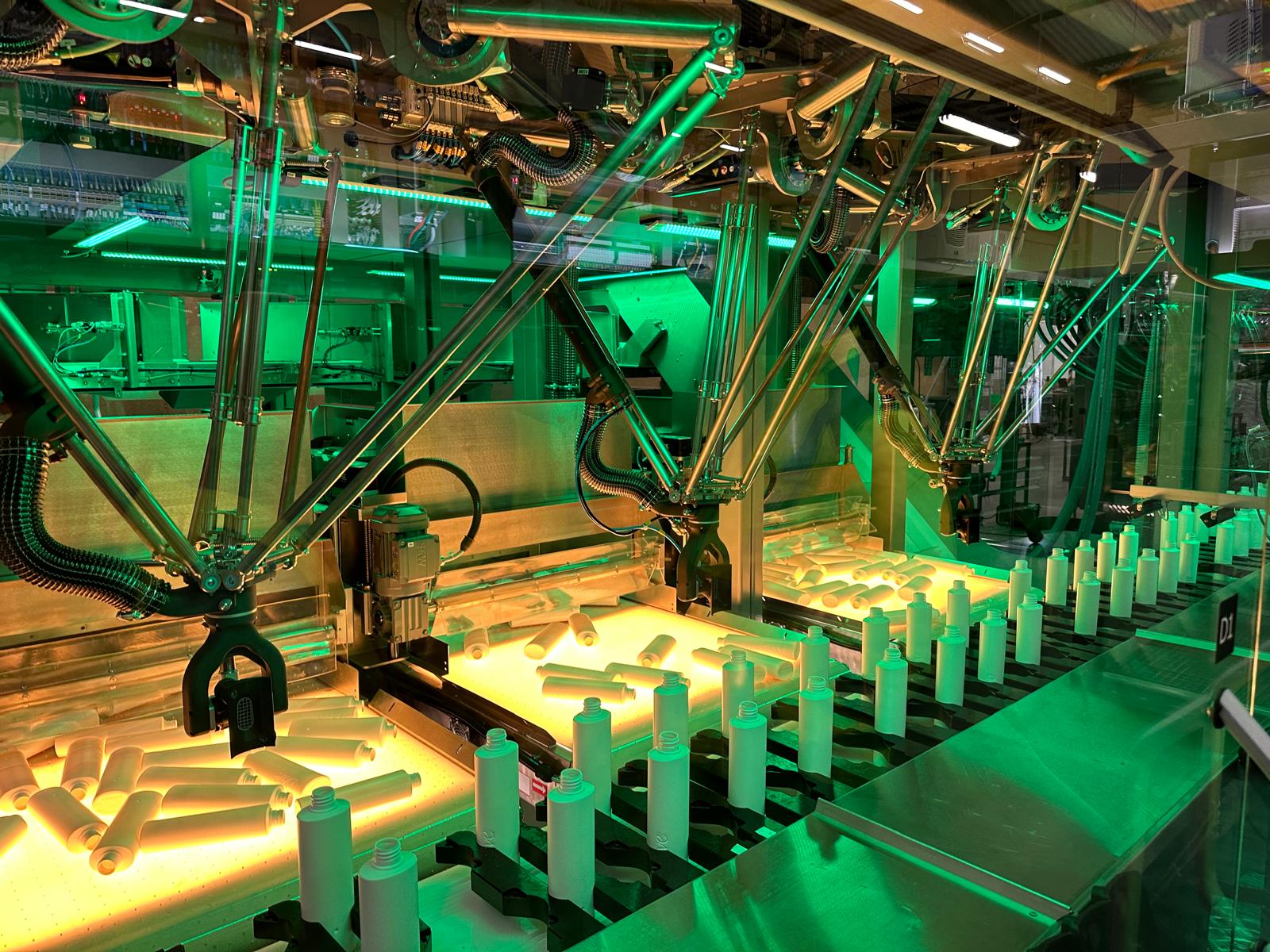
The final production stage uses filling and dosing equipment to transfer the finished polish into individual containers. A cosmetic filling machine performs this packaging step after the formulation has been mixed to a homogeneous consistency.
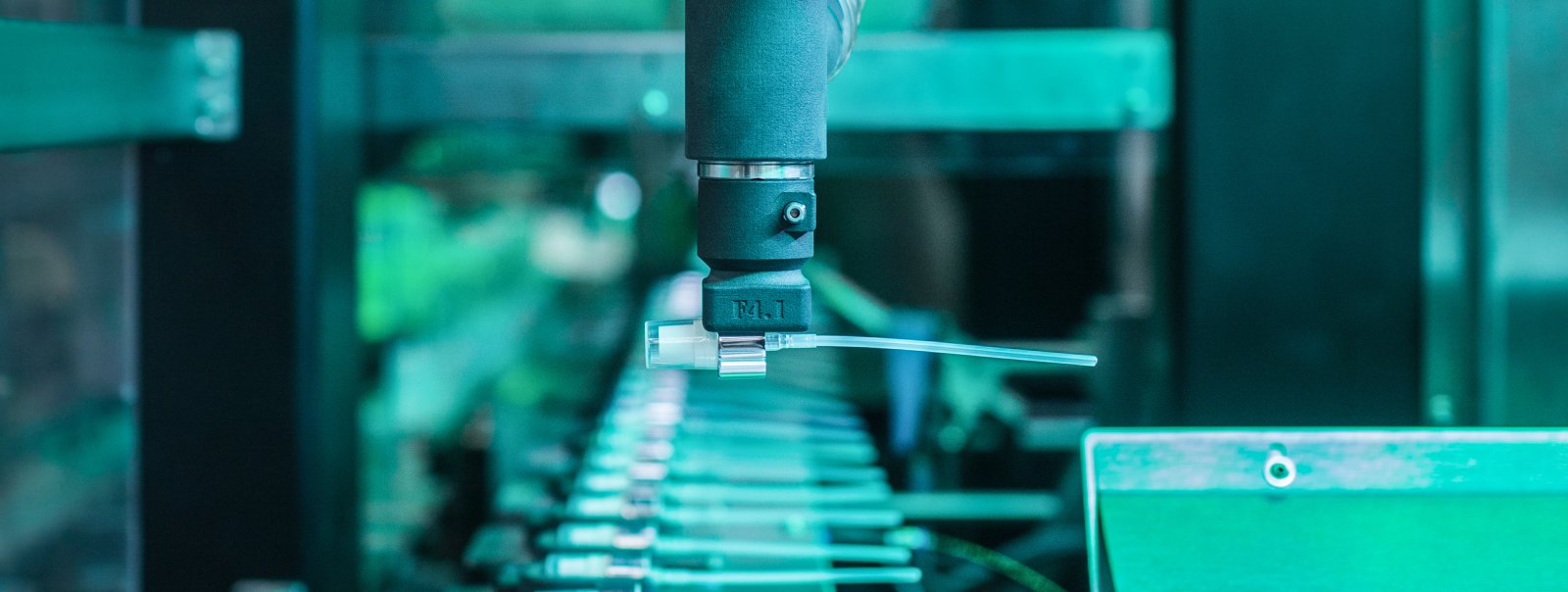
UNILOGO’s Cleanline 70 dispenses the required amount of product and closes the filled container with a servo-controlled capping machine. It combines product dosing and container closing in an integrated filling and capping system.
Nail polish manufacturing: summary
Nail polish manufacturing starts with a formulation designed to provide appearance, durability and easy brush application. Binder preparation, pigment grinding, colour adjustment and homogeneous mixing precede the final filling and closing stages.
For help selecting a nail polish dispensing line or other production equipment, use the contact form to discuss your cosmetic filling line requirements with UNILOGO’s specialists.