





Learn how cartoners form, load and close cartons, how vertical and horizontal machines differ, and what automatic cartoning offers production lines.
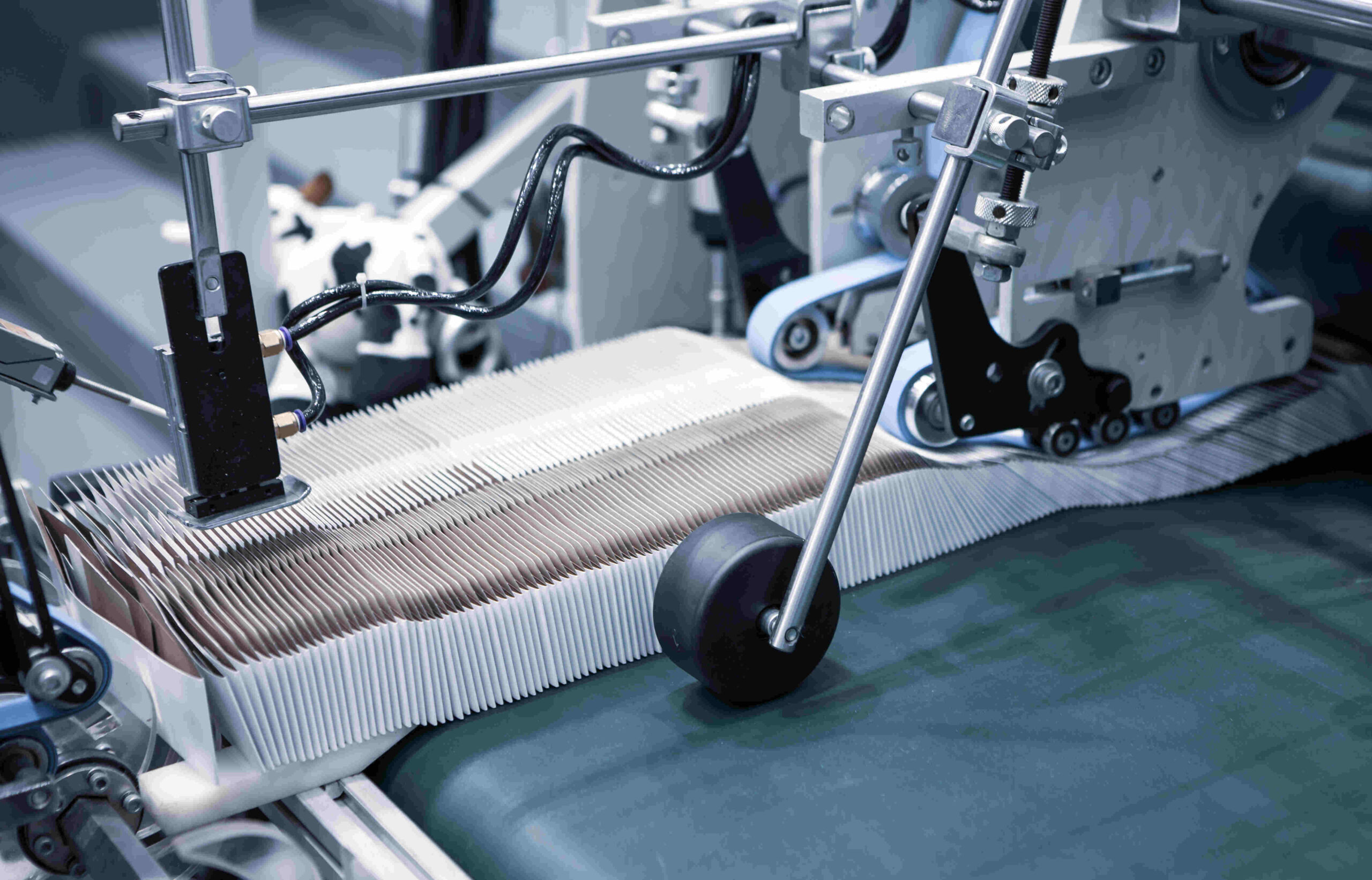
Cartoners are specialised machines used to pack products into individual or collective cartons in industries including food and pharmaceuticals. This automated packaging machinery forms boxes from cardboard blanks, loads products and closes the cartons. Product loading can be fully automatic or semi-automatic, depending on the application.
- What does a cartoner do?
- Types of cartoners and operating cycles
- Benefits and economic considerations
- Cartoners – summary
What does a cartoner do?
A cartoner takes cardboard blanks, forms them into boxes and packs products into them. It can form part of a production line that produces the items being packaged.
Product loading can be automatic or semi-automatic:
- Automatic loading: a feeder or robot places products into cartons.
- Semi-automatic loading: an operator places products into the cartons.
The choice depends on the product characteristics and the required output of the production line. For more individualised production, a semi-automatic cartoner can be a more economical solution.
Once the product is inside, the carton is closed. Closure methods include adhesives, foils or interlocking tabs cut into the cardboard blank.
Types of cartoners and operating cycles
Cartoning equipment ranges from compact machines that place one product into a carton at a time to extensive packaging lines for individual and collective packing. Two basic classifications distinguish machines by loading direction and operating cycle.
Vertical and horizontal cartoners
Vertical cartoners load products vertically, usually from above. They are used for loose products fed into cartons by gravity, such as rice and granules.
Horizontal cartoners load products from the side before closing the carton. They are commonly used in the food industry for biscuits and other food products.
Continuous-motion and start-stop cartoners
Continuous-motion cartoners fill and close cartons without stopping them. Their output ranges from 50 to 300 cartons per minute, depending largely on the product being packed.
Start-stop cartoners, also called intermittent-motion cartoners, stop each carton for filling and closing. They move cartons through the machine in strokes and can use either vertical or horizontal loading. Their output is generally lower than that of continuous-motion machines, usually not exceeding 60 cartons per minute.
Benefits and economic considerations
Speed is a principal advantage of automatic cartoning over manual packing. Folding cartons and loading products by hand is time-consuming and can be tiring for operators. Automating these tasks can improve packaging line efficiency and free employees for other, more demanding work.
Automatic cartoning can also improve packing accuracy. It does not eliminate mistakes: incorrect machine setup, for example, can still cause packaging errors.
For high-volume production, an automated cartoner can offer economic benefits by reducing the need for manual packing. Although the initial investment may be substantial, replacing work carried out by several operators can help recover the purchase cost. The choice between automatic and semi-automatic equipment depends on the product and the required production output.
Cartoners – summary
Cartoners form, fill and close cartons, with product loading performed automatically or by an operator. Machines can be classified as vertical or horizontal and as continuous-motion or start-stop. Within an automatic packaging line, cartoning can increase output, improve accuracy and reduce manual packing work.
To discuss production automation with Unilogo, use the contact form to get in touch with the team.